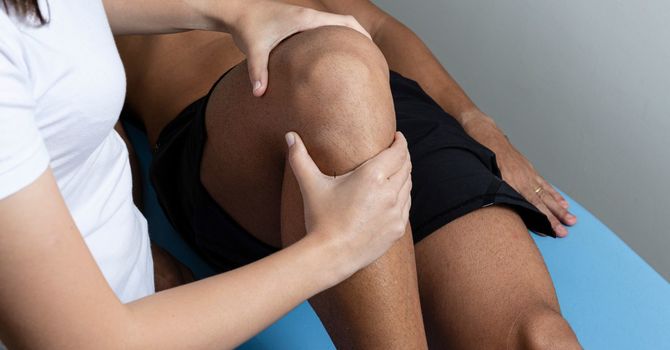
If you've ever felt a dull, nagging ache around or behind your kneecap after a run, you're not alone. Runner's knee, also known as patellofemoral pain syndrome, is one of the most common complaints among runners of every level, from weekend joggers to marathon veterans. The frustrating part isn't just the pain itself. It's that runner's knee often keeps coming back, even after rest, ice, and a few weeks off the road.
That's usually because the pain is a symptom, not the actual problem. The real cause is almost always something happening higher up the chain: how your foot strikes the ground, how your hip and pelvis stabilize with each stride, or how your stride length and cadence load your knee joint over and over again. This is exactly what a running analysis is built to uncover. At Hudson Point Physical Therapy in Poughkeepsie, our running analysis service gives runners a clear, evidence-based picture of what's driving their knee pain, so treatment addresses the cause instead of just quieting the symptom.
What Exactly Is Runner's Knee?
Runner's knee describes pain around the front of the knee, typically centered near or under the kneecap. It tends to show up or worsen with activities that load the knee repeatedly: running, squatting, climbing stairs, or sitting for long periods with the knee bent.
Common signs include:
- A dull ache around or behind the kneecap
- Pain that increases with running, especially downhill
- Stiffness after sitting for a while
- A grinding or clicking sensation when bending the knee
- Swelling that comes and goes with activity
Runner's knee symptoms and treatment approaches vary from person to person, which is part of why a generic "just rest it" plan so often fails. Two runners can have nearly identical pain patterns and completely different underlying causes.
How Does Runner's Knee Happen?
Understanding how does runner's knee happen is the first step toward actually fixing it. In most cases, the kneecap isn't tracking smoothly in its groove as the knee bends and straightens. Instead, it drifts slightly off-course with every stride, which creates friction and irritation over thousands of repetitions in a single run.
Several factors commonly contribute to this:
- Weak hip stabilizers. When the muscles around the hip and glutes aren't doing their job, the thigh bone can rotate inward with each step, pulling the kneecap out of alignment.
- Overstriding. Landing with the foot too far in front of the body increases impact forces that travel straight up into the knee.
- Sudden increases in mileage or intensity. Ramping up training too quickly doesn't give tissues time to adapt.
- Footwear that no longer supports your gait. Worn-out shoes or the wrong shoe for your foot type can change how forces move through your leg.
- Muscle imbalances, particularly a quadriceps that's stronger or tighter than the surrounding stabilizing muscles.
None of these show up clearly just from talking about symptoms in an office visit. They show up when you actually watch someone run.
Why Running Analysis Makes the Difference
A running analysis takes the guesswork out of diagnosing runner's knee. Rather than relying on a static exam alone, our team at Hudson Point Physical Therapy observes you running in real time (often using video captured from multiple angles) to assess exactly how your body moves at speed.
During a running analysis, we typically evaluate:
- Foot strike pattern and pronation
- Stride length and cadence
- Hip, knee, and ankle alignment throughout the gait cycle
- Trunk and pelvis stability while running
- Asymmetries between your left and right sides
This kind of detailed movement assessment reveals things a seated exam simply can't. For example, a runner might have perfectly strong hips when tested in a clinic but still show significant hip drop the moment they start running at pace, because fatigue and speed change how the body compensates. Catching that distinction is often the key to resolving pain that hasn't responded to rest or generic stretching.
From Analysis to a Personalized Plan
Once we've identified what's actually driving your knee pain, we build a treatment plan around it. This might include targeted hip and glute strengthening, cadence or stride retraining, mobility work for tight structures limiting proper movement, and a gradual return-to-running plan that respects your training goals without reinjuring the area.
This is different from a runner's knee rehab protocol pulled from a generic handout. Because the plan is built from what we actually saw on your analysis, exercises target your specific compensations rather than a list of "things that might help most runners." Patients often notice that pain decreases significantly once the root movement pattern is corrected, rather than just managing symptoms while the underlying cause continues doing damage with every run.
Who Should Consider a Running Analysis?
You don't need to be sidelined by injury to benefit. Running analysis is valuable for:
- Runners currently dealing with knee pain that hasn't resolved with rest
- Athletes returning to running after an injury who want to avoid repeating the same pattern
- Runners increasing mileage or training for a race who want to reduce injury risk
- Anyone curious about their form and looking to run more efficiently
Many runners in the Hudson Valley come to us after trying to push through pain on their own for weeks or months. The sooner a movement issue is identified, the easier it typically is to correct before it becomes a chronic pattern.
Getting Back to the Miles You Love
Runner's knee doesn't have to mean giving up running. In most cases, it means your body is asking for a closer look at how you move. A running analysis gives you (and your care team) the information needed to make lasting changes rather than temporary fixes.
At Hudson Point Physical Therapy, we combine hands-on expertise with detailed movement assessment to help runners throughout Poughkeepsie and the surrounding Hudson Valley get back to training pain-free. If knee pain has been holding back your runs, a running analysis is one of the most effective ways to find out why, and finally do something about it.
Ready to find out what's really causing your runner's knee? Schedule a running analysis with Hudson Point Physical Therapy today and take the first step toward pain-free miles.
.jpg)